




TL;DR
- COPD is grouped into four stages, called GOLD 1 to GOLD 4, based on a breathing test that measures how much air the lungs can push out in one second.
- The stages run from mild (stage 1) to very severe (stage 4), and many people live for years in the earlier stages.
- No stage predicts exactly how long someone will live. Flare-ups, weight, oxygen levels, and heart health matter as much as the stage itself.
- Stage 4 COPD often means breathlessness at rest, frequent flare-ups, and oxygen use, and it is when many families begin talking about comfort-focused care.
- Hospice can care for someone with end-stage COPD at home, with breathing support available 24 hours a day.
If someone you love lives with COPD, you have probably heard a word like “moderate” or “severe” in a doctor’s office and wondered what it really means for the months ahead. The 4 stages of COPD give that word a structure. They describe how much lung function has been lost, and they help the care team decide what treatment should come next.
COPD, or chronic obstructive pulmonary disease, is a long-term lung condition that includes emphysema and chronic bronchitis. It usually changes slowly, and the stage your loved one has today is not a countdown. This guide explains each stage in plain language, what families tend to notice at home, what affects life expectancy, and when it may be time to read about hospice eligibility. We have written it the way we would explain it at a kitchen table, without rushing you.
What Is COPD and How Is It Staged?

COPD narrows and damages the airways, so air is harder to breathe out. Over time the lungs trap air, the chest feels tight, and ordinary tasks like climbing stairs or getting dressed take more effort. Smoking is the most common cause, but years of exposure to dust, fumes, or secondhand smoke can also lead to COPD.
Doctors stage COPD with a breathing test called spirometry. Your loved one breathes in deeply and blows out as hard and fast as they can into a tube. The key number is FEV1, the amount of air pushed out in the first second, compared with what is expected for someone of the same age, height, and sex. The American Lung Association explains how these results are used to group COPD into stages.
Most care teams use the GOLD system, named for the Global Initiative for Chronic Obstructive Lung Disease. Alongside the FEV1 grade, doctors also look at day-to-day breathlessness and how often flare-ups happen. The number on the test is only part of the story.
If breathing is getting harder and you are not sure what to do next, you do not have to work this out alone. Call (972) 777-3000 any time, or start care online, day or night.
What Are the 4 Stages of COPD?
The four GOLD stages are based on FEV1 after an inhaler has been used, in people whose test already shows the airways are narrowed. Each stage reflects a larger loss of lung function, and each tends to bring a change in how daily life feels.
| Stage | Name | FEV1 (percent of expected) | What it often feels like |
|---|---|---|---|
| GOLD 1 | Mild | 80% or more | A morning cough or extra mucus; many people do not notice anything wrong |
| GOLD 2 | Moderate | 50% to 79% | Short of breath with activity; this is when most people are diagnosed |
| GOLD 3 | Severe | 30% to 49% | Breathlessness with everyday tasks, tiredness, and more frequent flare-ups |
| GOLD 4 | Very severe | Below 30% | Breathless even at rest, often using oxygen, with flare-ups that can be serious |
Stages are a guide, not a verdict. Two people with the same FEV1 can feel very different, and a person can have a good season or a hard one without their stage changing. What the stage offers is a shared language between your family and the care team.
You may also hear a letter, such as group A, B, or E. These GOLD groups describe how many symptoms someone has and how often flare-ups happen, and they help guide the choice of inhalers. If the letters and numbers feel confusing, it is always fine to ask the care team to explain your loved one’s stage in plain words.
COPD Stage 1: Mild COPD

In stage 1, lung function is only slightly reduced. The most common sign is a cough that lingers, often with mucus in the morning. Because these symptoms are easy to put down to age, a cold, or smoking, many people with mild COPD do not know they have it.
This is the stage where change has the biggest payoff. Stopping smoking, staying active, getting flu and pneumonia vaccines, and treating chest infections early can all help protect the lungs. Catching COPD at stage 1 gives the most room to slow it down.
Mild COPD is also the stage when a simple conversation can change a great deal. If your loved one smokes, support to quit is one of the most loving things a family can offer, and it helps at every stage. Many people are surprised to learn that regular walking and breathing exercises can make breathing feel easier, even this early.
COPD Stage 2: Moderate COPD
In stage 2, breathlessness shows up with activity. Walking quickly, carrying groceries, or climbing a flight of stairs leaves your loved one needing to stop and catch their breath. Coughing and wheezing become more noticeable, and this is often the point when someone finally sees a doctor and is diagnosed.
What usually helps at stage 2
- Daily inhalers that open the airways and make breathing easier
- Pulmonary rehabilitation, a program of exercise and breathing coaching
- A written action plan for what to do when symptoms flare
- Staying up to date on vaccines to lower the risk of chest infections
Many people live well in stage 2 for a long time. The goal is to keep them moving, prevent flare-ups, and build habits that protect the breath they have.
Stage 2 is also when families first notice small workarounds, like sitting down to get dressed or planning errands around rest breaks. These are good signs your loved one is adapting, and they are worth mentioning at appointments. They help the care team see how COPD is shaping everyday life, not just how the breathing test looks.
COPD Stage 3: Severe COPD
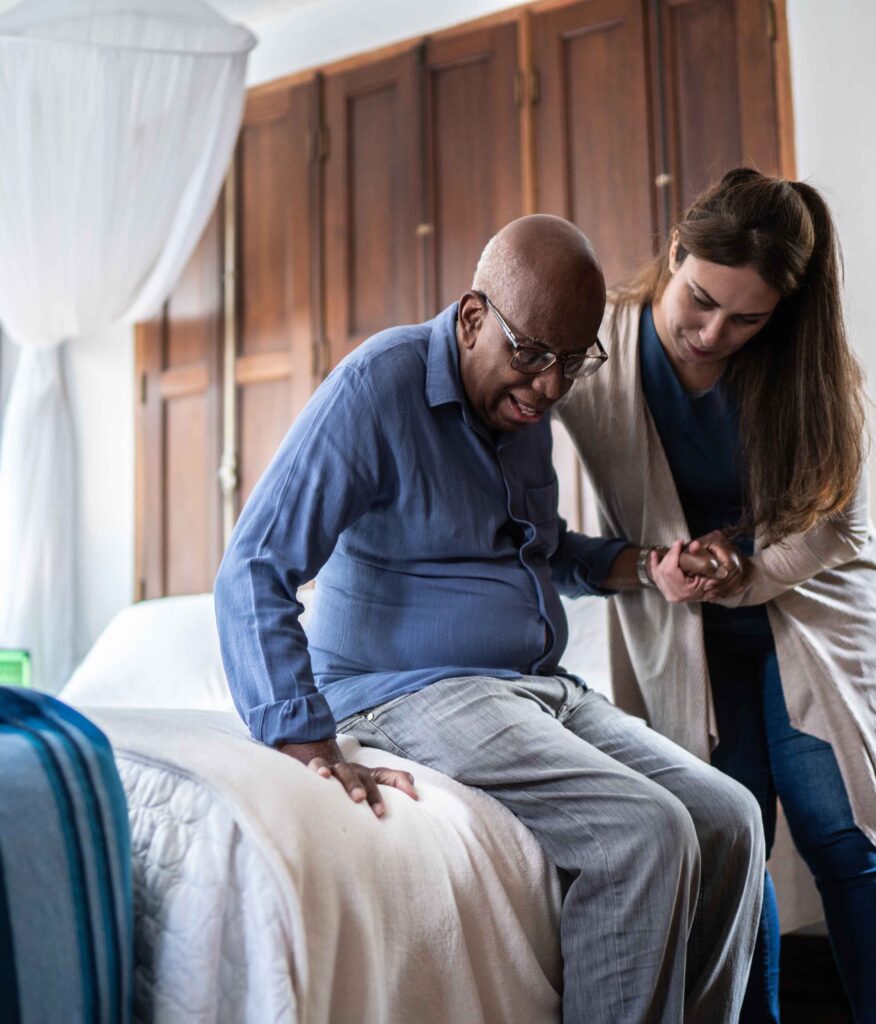
In stage 3, breathlessness becomes part of most days. Showering, dressing, or walking across the house can be exhausting, and fatigue lingers. Many people start sleeping propped up on pillows, and ankles may swell as the heart works harder to push blood through damaged lungs.
Flare-ups, sometimes called exacerbations, also become more common. A flare-up is a period when breathing gets much worse than usual, often triggered by an infection, and it may lead to an emergency visit or a hospital stay. Each serious flare-up is worth telling the care team about, because the pattern matters.
Treatment at stage 3 often adds stronger combination inhalers, medicines for flare-ups, and sometimes oxygen if levels drop. It is also a good time for a gentle conversation about goals of care, while there is still space to think clearly.
COPD Stage 4: Very Severe or End-Stage COPD

Stage 4 is the most advanced stage of COPD, and it is often called end-stage COPD. Breathlessness can happen even at rest, speaking in full sentences may be difficult, and many people need oxygen for much of the day. Flare-ups can be severe, and recovery from each one may take longer or be less complete.
The strain on the lungs often affects the heart as well, which is why swelling in the legs, tiredness, and fluid build-up are common. If your loved one also lives with heart problems, our end-stage heart failure guide explains how the two conditions can overlap.
Stage 4 does not mean the end is near for everyone. Some people live with it for a long time. But it is the stage when many families start asking not only how to treat the lungs, but how to protect comfort, sleep, and the moments that matter most.
COPD Life Expectancy by Stage
We will not give you a number here, and we would gently encourage caution with any page that does. Life expectancy with COPD varies widely, even between people in the same stage. The stage is one factor among several, and doctors look at the whole picture when they talk about outlook.
| Factor | Why it matters for COPD outlook |
|---|---|
| Lung function (FEV1) | Lower numbers generally mean less reserve when illness strikes |
| Flare-ups and hospital stays | Frequent, severe flare-ups are one of the clearest signs COPD is progressing |
| Weight and nutrition | Unplanned weight loss can signal the body is struggling to keep up |
| Breathlessness and walking distance | How far someone can walk and how breathless they feel both help predict outlook |
| Oxygen levels | Low oxygen at rest shows the lungs can no longer keep up on their own |
| Heart health and smoking | Heart strain shortens outlook, while quitting smoking helps at every stage |
Several of these factors are combined in a tool some doctors use called the BODE index, which looks at body weight, airflow, breathlessness, and exercise capacity together. Ask the pulmonologist directly. They know the test results, the flare-up history, and the trend over the last year, and a number from a search result cannot.
It can help to keep a few notes between appointments: how far your loved one can walk before resting, whether they are losing weight without trying, and how many flare-ups or hospital visits they have had in the past year. Bringing these notes to the pulmonologist gives a clearer picture than any single test, and it opens the door to honest conversations about what lies ahead.
Signs of End-Stage COPD Families Notice
As COPD reaches its final stage, the changes families see are often gradual, then more noticeable after each flare-up. Knowing what to watch for can make these weeks feel less frightening and help you tell the care team what is happening.
Common signs of end-stage COPD
- Breathlessness at rest: short of breath while sitting, talking, or eating
- Bluish lips or fingertips: a sign oxygen levels are low
- Morning headaches, confusion, or drowsiness: often linked to carbon dioxide building up
- Weight loss and poor appetite: eating becomes tiring when breathing is hard
- Swollen ankles and legs: from strain on the heart
- Anxiety or panic with breathlessness: feeling short of air is frightening
- Sleeping more and needing help with daily care
Many of these changes overlap with the wider signs that the body is slowing down. Our guide to signs death may be near walks through them gently. None of these signs is something your family has to face without support.
Some families notice these changes slowly over months, while others see a sharper decline after a serious flare-up or hospital stay. Both paths are common. If you are seeing several of these signs together, it is a good time to ask the care team whether comfort-focused care or hospice could help your loved one breathe and rest more easily.
How to Keep Someone With COPD Comfortable at Home
Breathlessness is the symptom that worries families most, and there is a great deal that can ease it. Small changes at home can make a real difference, and a hospice or palliative team can add medicines that calm breathing and the fear that comes with it.
| What you can do | How it helps with COPD |
|---|---|
| Sit upright or lean slightly forward | Gives the lungs more room to expand |
| Use a handheld fan toward the face | Cool moving air can make breathlessness feel less intense |
| Practice pursed-lip breathing | Breathing out slowly through pursed lips helps empty trapped air |
| Offer small, frequent meals | Large meals press on the lungs and take more breath to eat |
| Use oxygen exactly as prescribed | Keeps levels steady; never smoke or use open flames near oxygen |
| Keep the room calm and cool | A quiet voice and a steady presence can ease panic |
When breathlessness becomes severe, the hospice team may use medicines, including low doses of morphine, to ease the feeling of air hunger safely. During a breathing crisis, hospice can also provide more intensive nursing at home through the four levels of hospice care, so a flare-up does not have to mean an emergency room.
Caring for someone who is short of breath can be exhausting, especially at night. It is okay to ask for help, and it is okay to take breaks. Hospice aides, volunteers, and short respite care stays exist so that family caregivers can rest, too.
When to Consider Hospice for End-Stage COPD

Hospice is not the moment care stops. It is the moment care changes direction, from trying to reverse the illness to making breathing, rest, and time together as comfortable as possible. For COPD, many families begin the conversation after repeated flare-ups, a hospital stay that is harder to recover from, or when breathlessness at rest becomes the everyday reality.
Care teams look at the whole clinical picture, and a physician certifies eligibility in every case. The guidance they commonly consider for lung disease is summarized below.
| What care teams look for | What it can look like at home |
|---|---|
| Disabling breathlessness at rest | Short of breath in a chair, even with inhalers and treatment |
| Progressing illness | More emergency visits, hospital stays, or chest infections |
| Low oxygen at rest | Oxygen levels that stay low without supplemental oxygen |
| Supporting signs | Unplanned weight loss, a fast resting heart rate, or heart strain |
What arrives with hospice is a team: a nurse who manages breathing and anxiety, an aide for bathing and personal care, a social worker, a chaplain if wanted, and volunteers. Oxygen, a hospital bed, and related medicines are provided. Most of our patients stay where they already live, whether that is a home in Dallas, an apartment in Plano, or a room in a skilled nursing facility.
Not sure whether it is time?
You do not need a referral, and you do not need to have decided anything, to ask a question. A nurse can talk through where your loved one is and what support is available, with no obligation and no pressure.
Lifted Hospice is CHAP accredited, rated 5 stars by the families we serve, and reachable 24 hours a day, 7 days a week, including nights, weekends, and holidays.
Stages of COPD: Frequently Asked Questions
What Are the 4 Stages of COPD?
The four GOLD stages are based on FEV1, the amount of air pushed out in one second. Stage 1 (mild) is 80% or more of the expected value, stage 2 (moderate) is 50% to 79%, stage 3 (severe) is 30% to 49%, and stage 4 (very severe) is below 30%. Doctors also consider breathlessness and flare-ups.
How Long Can Someone Live With Stage 4 COPD?
There is no single answer. Life expectancy with stage 4 COPD depends on flare-ups, oxygen levels, weight, heart health, and how the body responds to treatment. Some people live with stage 4 for years. The pulmonologist who knows the full picture is the best person to talk with about your loved one’s outlook.
What Are the Signs of End-Stage COPD?
Common signs include breathlessness at rest, bluish lips or fingertips, morning headaches or confusion, weight loss, swollen ankles, anxiety with breathing, frequent flare-ups, and sleeping more. Most of these symptoms can be eased, so share them with the care team rather than waiting.
Can COPD Get Better or Go Back a Stage?
Lost lung function does not usually come back, so COPD is not reversed. However, symptoms can improve with treatment, quitting smoking, and pulmonary rehabilitation, and a person may feel much better even if their stage stays the same. Preventing flare-ups helps protect the lung function that remains.
When Should Someone With COPD Consider Hospice?
Many families start the conversation when breathlessness happens at rest despite treatment, flare-ups and hospital stays become more frequent, or oxygen levels stay low. A physician certifies hospice eligibility in every case, so it is always reasonable to ask the care team whether hospice could help.
Does Hospice Provide Oxygen for COPD?
Yes. Hospice provides medical equipment related to the hospice diagnosis, which for COPD usually includes oxygen, along with items like a hospital bed and related medicines. The hospice nurse also teaches the family how to use oxygen safely at home.
Can Hospice Care for End-Stage COPD Happen at Home?
Yes. Most hospice care is delivered wherever the patient already lives, including a private home, an assisted living community, or a skilled nursing facility. The team comes to the patient, and support is available 24 hours a day, including nights, weekends, and holidays.
This guide is for information and support. It is not medical advice, and it cannot replace a conversation with the physician who knows your loved one’s history.

Cindy Sumrall serves as the Chief Clinical Officer at Lifted Hospice, bringing more than 30 years of experience in nursing, hospice care, and healthcare leadership. Known for her steady, people-first approach, Cindy leads our clinical teams with a focus on compassion, safety, and excellence. She works side-by-side with our caregivers, guiding and supporting them as they deliver personalized care that honors each patient’s dignity and story.
Her background spans bedside nursing, infusion therapy, and senior leadership roles, equipping her with a deep understanding of both the clinical and human sides of end-of-life care. At Lifted, Cindy is committed to fostering a culture where patients, families, and staff alike feel seen, supported, and valued — ensuring our mission of helping people live life to the fullest is lived out every day.