




TL;DR
- Mottled skin is a blotchy, lace-like pattern of purple, red, or bluish color that often appears as circulation slows near the end of life.
- It usually starts on the feet, knees, and hands and can slowly spread up the legs and arms.
- Mottling often appears in the final days of life, but the timing varies, it can come and go, and some people never develop it.
- Mottled skin is not usually painful. Gentle warmth, soft blankets, and turning can help keep your loved one comfortable.
- If someone who is not on hospice suddenly develops mottled skin, call their doctor or emergency services right away.
If you are sitting beside someone you love and have noticed their knees or feet turning a patchy purple, you may be frightened by what it means. Mottled skin before death is one of the changes hospice nurses see most often, and it is also one of the least explained. Families tell us they wish someone had described it to them before they saw it for the first time.
Mottling is a sign that the body is gently drawing its circulation inward, protecting the heart and brain as it slows down. It often shows up alongside other signs that death may be near, and it can help families understand that the final season is close. This guide explains what mottled skin looks like, why it happens, what the timeline can look like, and how to keep your loved one comfortable, without rushing you.
What Is Mottled Skin Before Death?

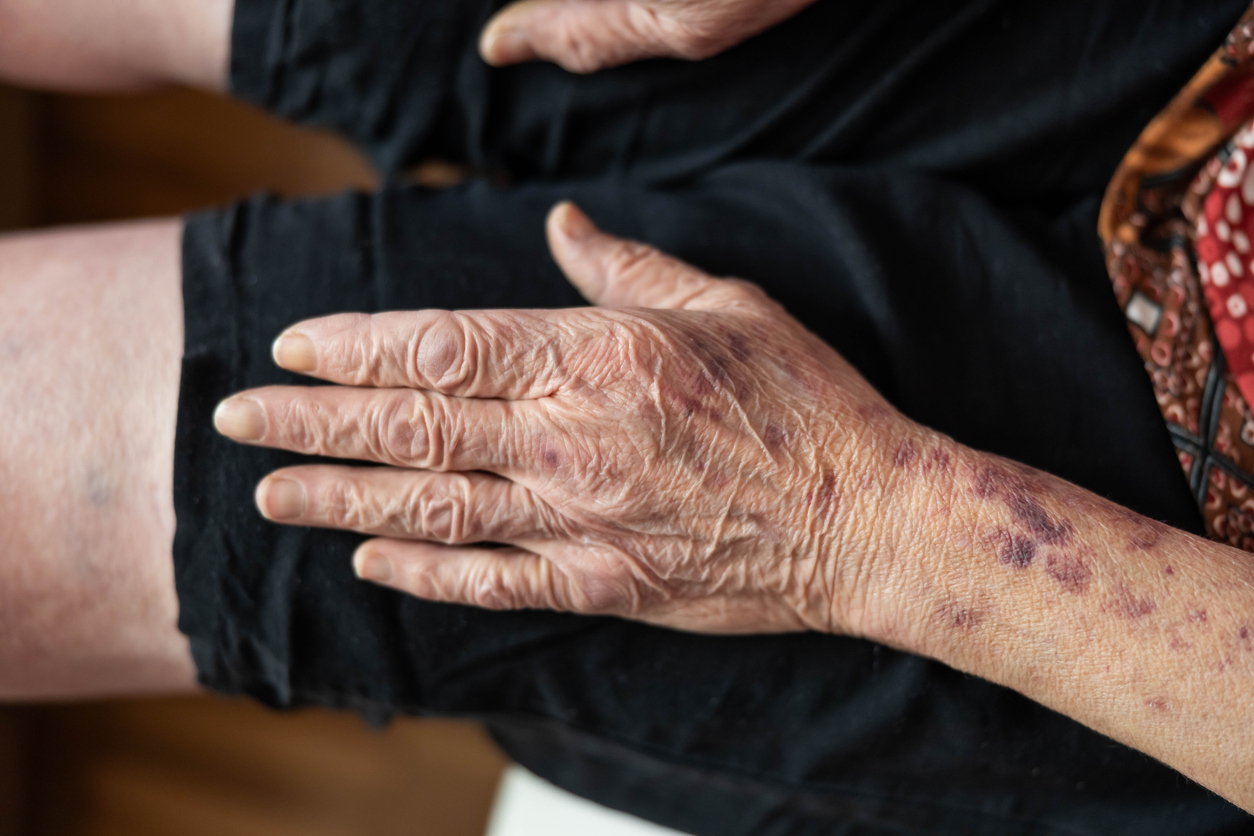
Mottled skin before death, also called mottling, is a change in skin color caused by slowing blood flow. Instead of an even tone, the skin develops a blotchy, marbled, or net-like pattern. The patches may look purple, bluish, reddish, or grayish, and on darker skin tones they can look darker or ashen rather than purple.
Mottling is not a disease or an injury. It is the visible sign of a body that is using its remaining energy to protect what matters most. Hospice teams watch for it because it tells them circulation is changing, which helps them plan comfort care and prepare families for what may come next.
Mottling can look alarming, but it is a natural part of the dying process for many people. Understanding it ahead of time often makes it far less frightening to see.
If you are seeing changes like this and are not sure what to do, you do not have to work this out alone. Call (972) 777-3000 any time, or start care online, day or night.
Why Mottled Skin Happens at the End of Life
As someone nears the end of life, the heart pumps less strongly and blood pressure falls. To protect the vital organs, the body pulls blood away from the places farthest from the heart, such as the feet, legs, and hands. With less blood flowing through the small vessels near the surface, the skin shows the uneven, lacy pattern we call mottling. The National Cancer Institute’s guide to the last days of life describes the physical changes families may notice as the body slows down.
Breathing changes can add to it. When breathing slows or becomes irregular, less oxygen reaches the blood, which can deepen the bluish or purple tone. The skin may also feel cool to the touch, especially on the hands and feet, even when the room is warm.
None of this means your loved one is suffering or that anyone has done something wrong. It is the body gently turning inward, not a failure of care.
What Mottled Skin Looks Like and Where It Appears
Mottling usually begins in the places with the weakest circulation and moves upward over time. Families most often notice it first when they lift a blanket or help change socks. The pattern and color can vary from person to person and even from hour to hour.
| Where mottled skin appears | What families may notice |
|---|---|
| Feet and toes | Often the first place; soles and toes may look purple and feel cool |
| Knees | A lacy, blotchy pattern across the kneecaps is very common |
| Legs | Patches may spread upward from the feet toward the thighs |
| Hands and fingers | Fingertips and nail beds may look bluish or dusky |
| Arms and back | In some people, mottling spreads to the arms, or shows on the back and underside of the body where they lie |
On lighter skin, mottled skin tends to look purple, red, or blue. On darker skin, it may look like darker patches, or the skin may appear grayish or ashen, so it helps to check the palms, soles, and nail beds. If you are unsure whether what you see is mottling, a hospice nurse can look with you.
It can help to check gently at the same times each day, such as when you change a blanket or help with socks, rather than watching constantly. Notice whether the patches are staying in one place or slowly moving upward, and whether the skin feels cool. Sharing these small observations with your nurse helps them understand how circulation is changing.
Mottled Skin Before Death: What the Timeline Can Look Like

This is the question families ask most, and we want to answer it honestly. Mottled skin often appears in the final days of life, and when it spreads beyond the feet and knees it is generally considered a sign that death may be close. But there is no reliable clock. Mottling can come and go, some people are mottled for longer than expected, and some people never develop it at all.
| What you may see | What it may suggest | What to keep in mind |
|---|---|---|
| Mottling that comes and goes on the feet or knees | Circulation is starting to change | This can happen days before other major changes, or settle again for a while |
| Mottling that stays and slowly spreads up the legs | The body may be entering its final days | Often seen with more sleep, less eating, and breathing changes |
| Widespread mottling with cool hands, arms, and legs | Death may be close, sometimes within hours | This is a good time to call family and your hospice nurse |
Mottling rarely appears on its own. Families often notice it along with longer sleep, confusion, changes in breathing, and a loved one who stops eating or drinking. Your hospice nurse can look at the whole picture and tell you what they see, gently and honestly.
If you have family who would want to be present, mottling that is spreading is a reasonable moment to let them know. You do not have to be certain, and no one will fault you for calling people close. Many families say they were grateful to have gathered, even when the final day came a little later than they expected.
Does Mottled Skin Hurt?
This is often the first worry, and the answer is comforting. Mottled skin is not usually painful. The color change reflects slowing circulation near the surface of the skin, not an injury, and most people show no signs of discomfort from the mottling itself. By the time mottling appears, many people are also sleeping deeply or resting quietly.
Your loved one may feel cool, and some people seem more settled with a light blanket or a pair of soft socks. What matters most is watching for other signs of discomfort, such as grimacing, moaning, restlessness, or tensing when moved. If you see any of these, tell your hospice nurse, because they can be eased.
It is natural to want to rub or warm the mottled areas, and a gentle touch is fine. Try to avoid firm massage on fragile skin, and never use heating pads, hot water bottles, or electric blankets, because skin with poor circulation can burn without your loved one being able to tell you. A soft blanket and your company are enough.
Other Skin Changes That Can Appear With Mottled Skin
Mottling is one of several skin changes that can happen near the end of life. Knowing the others helps families recognize what is expected and what the care team would want to hear about. Each of these changes has a simple way to support comfort.
| Skin change | Why it happens | What helps |
|---|---|---|
| Cool hands and feet | Blood flow moves toward the core | A light blanket or soft socks; avoid heating pads |
| Pale, gray, or bluish tone | Less oxygen reaching the skin | Keep the room calm and let your nurse know |
| Dry or thin skin | Less fluid and nutrition | Gentle, unscented lotion and lip balm |
| Pressure areas | Lying in one position for long periods | Gentle turning and soft padding, guided by the care team |
| Sweating or clammy skin | The body struggling to regulate temperature | A cool, damp cloth and fresh linens |
All of these changes are part of the comfort care hospice teams provide every day. You never need to guess what to do alone.
Some of these changes appear together with mottling, while others show up days earlier or not at all. Skin changes are simply one way the body shows it is slowing down, alongside quieter breathing, longer sleep, and less interest in food. Seeing several of them at once is a good reason to check in with your hospice nurse.
How to Comfort Someone With Mottled Skin

There is no treatment that reverses mottling, and there does not need to be. The goal is comfort, and you can offer a great deal of it with simple, loving care. Many families find these small acts give them something meaningful to do in a time that can otherwise feel helpless.
Simple ways to bring comfort
- Keep them warm, not hot: a light blanket or soft socks, and no heating pads or hot water bottles, which can burn fragile skin
- Change position gently: with guidance from your nurse, to protect pressure areas
- Moisturize dry skin: with a gentle, unscented lotion
- Hold their hand or stroke their arm: touch still comforts even when someone cannot respond
- Talk to them: hearing is thought to be one of the last senses to fade
- Play soft music or read aloud: familiar sounds can bring peace to the room
You do not have to do everything, and you do not have to do it perfectly. Your presence is the gift.
If you need to step away to sleep, eat, or simply breathe, that is okay too. Ask a family member, friend, or hospice volunteer to sit with your loved one for a while. Taking care of yourself is part of taking care of them, and it helps you stay present for the moments that matter most.
Coping When You See Mottled Skin on Someone You Love

Seeing mottled skin can bring a wave of feelings: fear, sadness, relief that suffering may soon end, and sometimes guilt for feeling that relief. All of these are normal. Many families say mottling was the moment the reality of saying goodbye became real.
If you can, use this time to call the people who would want to be there, say the things you want to say, and simply sit together. You might also lean on your hospice chaplain, social worker, or nurse, who have walked beside many families at this moment. After a loss, our bereavement support continues to walk with families for months.
There is no right way to feel, and you do not have to carry this alone.
When Mottled Skin Is Not a Sign of Dying
Mottled skin does not always mean someone is dying. The same lacy pattern can appear for many other reasons, and in someone who is not seriously ill, it can be harmless or it can be a warning sign that needs medical care. Context matters a great deal.
Other reasons mottled skin can appear
- Being cold: a harmless, temporary pattern that fades when the skin warms up
- Livedo reticularis: a net-like skin pattern that can be benign or linked to other conditions
- Serious infection or sepsis: a medical emergency when it comes with fever, confusion, or fast breathing
- Very low blood pressure or shock: from bleeding, dehydration, or heart problems
- Circulation or blood vessel conditions
- Some medicines that affect blood vessels
If someone is receiving hospice care, mottling is usually an expected change, and the right step is to call your hospice nurse. If someone who is not on hospice suddenly develops mottled skin, especially with fever, confusion, or trouble breathing, call their doctor or 911 right away.
It also helps to remember that people who are not dying can have mottled skin for years without any serious problem, especially when it only appears in the cold and fades as the skin warms. The difference is in the whole picture. A doctor can look at other signs, check blood pressure and circulation, and tell you whether the pattern needs treatment.
How Hospice Supports a Loved One With Mottled Skin

Hospice is not the moment care stops. It is the moment care changes direction, toward comfort, dignity, and time together. When mottled skin appears, a hospice nurse can explain what is happening, adjust medicines for any discomfort, and help your family know when to gather. During the final days, hospice can also provide extra nursing time at home through the four levels of hospice care.
| Who comes with hospice | How they help when mottling appears |
|---|---|
| Nurse case manager | Checks comfort, explains changes, and guides the family on what to expect |
| Hospice aide | Gentle bathing, skin care, and repositioning |
| Social worker | Helps with plans, paperwork, and family conversations |
| Chaplain | Spiritual support for any faith, or none, only if wanted |
| Bereavement team | Walks alongside the family for 13 months after a loss |
Most of our patients are cared for where they already live, whether that is a house in Fort Worth, an apartment in Dallas, or a room in a skilled nursing facility. Support is a phone call away, every hour of every day.
Not sure what these changes mean?
You do not need a referral, and you do not need to have decided anything, to ask a question. A nurse can talk through what you are seeing and what support is available, with no obligation and no pressure.
Lifted Hospice is CHAP accredited, rated 5 stars by the families we serve, and reachable 24 hours a day, 7 days a week, including nights, weekends, and holidays.
Mottled Skin Before Death: Frequently Asked Questions
What Does Mottled Skin Look Like Before Death?
Mottled skin looks like a blotchy, lace-like, or marbled pattern of purple, red, or bluish color. It usually starts on the feet, knees, and hands. On darker skin tones it may look like darker or grayish patches, so the palms, soles, and nail beds can be easier places to notice it.
How Long After Mottling Does Death Occur?
There is no exact timeline. Mottling often appears in the final days of life, and widespread mottling is generally considered a sign that death may be close. But it can come and go, some people are mottled for longer, and some never develop it. Your hospice nurse can help you understand what it means for your loved one.
Does Mottled Skin Hurt?
Mottled skin is not usually painful. It reflects slowing circulation, not an injury. Your loved one may feel cool, so a light blanket or soft socks can help. Watch for other signs of discomfort, such as grimacing or restlessness, and tell your hospice nurse so they can be eased.
Where Does Mottling Usually Start?
Mottling usually starts in the feet, toes, and knees, where circulation is weakest. It can then spread slowly up the legs and may appear on the hands, arms, or the parts of the body resting against the bed.
Can Mottled Skin Come and Go?
Yes. Mottling can appear, fade, and return as circulation changes from hour to hour. Seeing it fade does not always mean things are improving, and seeing it return does not always mean death is immediate. Your hospice team can help you read the changes in context.
Is Mottled Skin Always a Sign That Death Is Near?
No. Mottled skin can also appear from being cold, from a skin pattern called livedo reticularis, from infection, or from low blood pressure. For someone on hospice it is usually an expected change, but anyone not on hospice who suddenly develops mottling should be seen by a doctor right away.
What Should I Do If I Notice Mottled Skin on a Loved One?
If your loved one is on hospice, call your hospice nurse, who can check on comfort and explain what the change may mean. Keep them warm with a light blanket, stay close, and consider calling family who would want to be there. If they are not on hospice, contact their doctor or emergency services.
This guide is for information and support. It is not medical advice, and it cannot replace a conversation with the physician or hospice nurse who knows your loved one.

Cindy Sumrall serves as the Chief Clinical Officer at Lifted Hospice, bringing more than 30 years of experience in nursing, hospice care, and healthcare leadership. Known for her steady, people-first approach, Cindy leads our clinical teams with a focus on compassion, safety, and excellence. She works side-by-side with our caregivers, guiding and supporting them as they deliver personalized care that honors each patient’s dignity and story.
Her background spans bedside nursing, infusion therapy, and senior leadership roles, equipping her with a deep understanding of both the clinical and human sides of end-of-life care. At Lifted, Cindy is committed to fostering a culture where patients, families, and staff alike feel seen, supported, and valued — ensuring our mission of helping people live life to the fullest is lived out every day.